
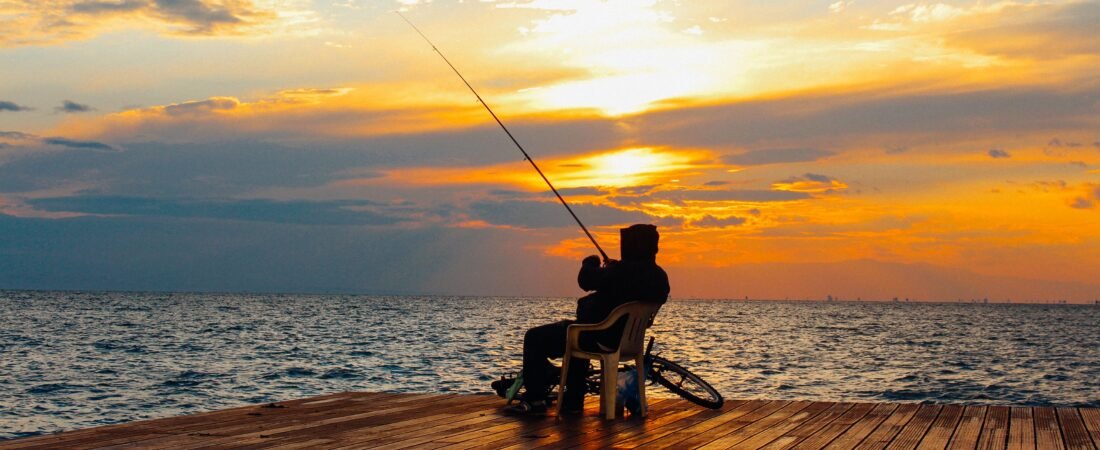
The short answer: bank and pier fishing for beginners works without a boat if you travel light, scout the water first and plan how you will land a fish. From the bank, keep noise down and cast to cover from a distance. From a pier, the pier itself is structure, so you often do not need to cast far.
Disclosure: some links on this site may be affiliate links. If you buy through them, we may earn a commission at no extra cost to you.
In this guide:
- Bank versus pier at a glance
- Bank and pier fishing for beginners: what to bring
- Where to cast from the bank
- Stealth on the bank
- How to fish from a pier
- Landing and handling fish
- Fishing from shore with kids
- Safety and etiquette
- What it costs
- Questions for a local bait shop (our suggestion)
- A simple first-trip plan (our suggestion)
- Common beginner mistakes
- The limits of this advice
- How we researched this
- FAQ
Bank versus pier at a glance
Bank fishing is mostly about stealth and cover, while pier fishing is mostly about logistics and landing the fish. Both work from land, but the sources we read describe them differently, and the differences change what you carry and how you fish.
| Bank fishing | Pier fishing | |
|---|---|---|
| Main sources in this guide | BassResource (Brinks, 2022), Missouri Dept. of Conservation (2024) | Take Me Fishing (Downs, 2018), NJ Division of Fish and Wildlife (2020) |
| Approach | Stealth; sound and shadow matter | The pier is structure; you may not need to cast far |
| Gear | Small bag, two versatile rods | Light and heavy spinning outfits, wheeled hauler |
| Lures or bait | Shallow-water lures, finesse baits | Local baitfish, cast net or sabiki rig; bait rigs |
| Landing a fish | Shoreline; plan where you will land the fish | Pier net, not reeling the fish up |
| Biggest hazards | Steep banks, no-fishing zones, crowds | Pilings and tangles, other anglers, jetty footing |
Table: our editorial summary of the sources named in the first row.
The bank advice comes mostly from freshwater bass sources, and the pier advice includes saltwater-style pier fishing. We point out where that matters.
Bank and pier fishing for beginners: what to bring
Bring less than you think, but bring what lets you swap lures and land a fish. Tyler Brinks of BassResource (December 2022) recommends a backpack or small tackle bag with proven lures, spare line, pliers and line cutters for the bank.
He suggests two versatile rods, such as a 7-foot medium-heavy baitcasting rod and a 7-foot medium spinning rod, so you can change baits without changing rods. That is bass-specific, so treat it as an example. The general idea is a small kit that fits where you will cast.
For lures, Brinks lists shallow-water choices: frogs, jigs, ChatterBaits and soft plastics. He says to leave deep-diving crankbaits and jigging spoons at home because they are harder to fish from shore. For finesse fishing, he mentions the drop-shot and the Ned rig.
Take Me Fishing’s Alycia Downs (June 2018) recommends two spinning outfits for a pier: a light one for easy casting and calm weather, and a heavy one for big fish and rough conditions. She suggests a wheeled gear hauler to avoid repeated trips to the car.
She also lists a battery-powered bait bucket with an aerator to keep bait alive, and polarized sunglasses to cut glare and see into the water.
Where to cast from the bank
Cast first to anything that gives fish shade or shelter: docks, stumps, laydowns, bank grass, rocks and inflows. Brinks says to make several casts around a dock before stepping onto it, because bass often hold there for shade and bluegill and crappie may be nearby.
The Missouri Department of Conservation’s article “Bank Fishing Big Lakes and Reservoirs” (Andrew Branson, April 2024) adds access advice. It says better fishing can be found by walking down the bank away from busy boat ramps, and that lesser-used public access points are worth finding. The page is marked archived, so confirm current rules.
| Spot | Why it holds fish | Source |
|---|---|---|
| Docks, piers, stumps, laydowns | Shade and cover; bass and bluegill or crappie nearby | Brinks |
| Inlets, outlets, gravel banks | Water flows in or out, so there is food and fish | Missouri Dept. of Conservation |
| Walkways, bridge pilings, riprap | Manmade structure can hold fish | Missouri Dept. of Conservation |
| Points and breaks | Shallows meet deeper water or conditions change | Missouri Dept. of Conservation |
| Windswept banks and coves | Wind can concentrate baitfish and larger fish | Missouri Dept. of Conservation |
| Canals, farm and retention ponds, small creeks | Can hold big bass; target inflows, bridges, objects | Brinks |
| Marinas and boat launches | Crowded, but fish get used to noise | Brinks |
Table: our editorial summary of the sources listed.
Brinks says fish at marinas and launches are used to noise, and that tournament releases can concentrate bass there. He suggests casting from several angles and trying finesse methods. The Missouri article says to cast in many directions from one spot and move on if nothing bites.
Finding fish is a skill of its own. Our guide on how to find fish in a lake explains structure and cover, which apply from the bank as much as from a boat.
Finding a public spot
Debbie Hanson of Take Me Fishing (August 2019) says your state fish and wildlife agency can supply regional lists of bank fishing locations. She also points to state and county parks that have fishing ponds or public piers, and to local tackle shops and clubs for general tips.
Her warnings are simple: always check that fishing is allowed, stay off private property and get a license before you start. The Missouri article adds that you should look for posted no-fishing zones near dams, and that rules do not allow fishing close to marinas and gas docks there.
Stealth on the bank
Stealth is the main advantage of the bank: you can approach fish that boat motors and electronics would alert. Brinks says the same stealth is required of you, because “sounds and even your own shadow can hamper your chances of catching some of these shallow bass.”
His advice is to keep noise down as you move along the shoreline, make your first casts from a distance, and avoid standing right next to cover until you have worked it. He also says a simple approach is usually best on the bank.
The Missouri article offers a useful reality check for big, clear reservoirs. It says bank success can be limited on deep, clear lakes, that sunfish and seasonal bass are common bank catches, and that you should be willing to change tactics. Adjust your expectations to the water you are on.
How to fish from a pier
On a pier, you fish the structure you are standing on, so start close and go deeper only if nothing bites. Downs says the pier itself is structure, so you often will not need to cast far. She also suggests scouting at low tide for submerged structure or troughs, because marine growth draws baitfish, which draw larger fish.
For bait, Downs says to identify the baitfish that dominate the area, since predators feed on them. You can buy bait at a local shop, use a cast net or catch your own with a sabiki rig. Rules on collecting bait and on cast nets vary by location, and she does not list them, so check locally.
The New Jersey Division of Fish and Wildlife (Paul Bechtel, October 2020) writes about saltwater shore fishing. It lists topwater plugs, spoons and poppers, divers, bucktails and jigs tipped with rubber baits, and live or frozen bait on a fish finder rig or a high-low rig. It also says to follow the bait, since larger fish tend to pursue baitfish.
It names piers that permit fishing and jetties you can reach carefully as places to fish, and says to use caution on a jetty. Check that the pier allows fishing before you set up.
Downs also advises standing between two pilings when reeling in a fish and avoiding the pilings during a fight, because a hooked fish can dart under the pier and snag your line on the supports. Plan your position before the fish bites, not after.
Research helps here too. Downs recommends learning the target species, seasonal timing and migration patterns, and asking local bait shops and online forums for current information. Our guide to the best time and weather to fish covers timing in general terms.
Landing and handling fish
On a pier, keep the fish in the water and scoop it with a pier net instead of reeling it up. Downs says this protects the fish, your gear and the anglers around you. From the bank, plan where you will land the fish before you cast, because the shoreline may be steep, muddy or crowded.
The New Jersey article gives handling steps that apply to any fish you plan to release. It says not to keep a fish out of water longer than necessary, to wet your measuring tape or board so a dry surface does not damage the fish, and to leave the slime on, since it protects against fungus and bacteria.
It also recommends barbless hooks to reduce injury and says to make sure the fish can swim on its own before release. For fish caught from depth, it says to watch for barotrauma such as popped eyes or a swollen air bladder, and that descending devices are safer than venting with a needle.
Check your state’s rules on size and bag limits before you keep any fish. The sources we read do not list them.
Fishing from shore with kids
Keep kid trips short, close to the car and on gentle banks, and make fun the goal. Bass Pro Shops’ 1Source (posted May 2019, updated April 2026) published six tips for bank fishing with kids. It is retailer content, so we use it for the ideas, not for products.
- Learn what is biting and where. Ask at bait shops, check online and talk with conservation officers, then match tackle and bait to the species. The article calls bluegill and catfish beginner-friendly.
- Pick a quiet time and place. Avoid crowds on weekends and holidays. An early weekday morning gives the child your full attention.
- Put safety first. The article suggests a life jacket even on shore or dock, a spot with a margin for error and no steep drop-off, piers with railings, and keeping the child within arm’s reach.
- Use simple gear. An easy-casting rod and reel, small bobbers, hooks and split shot, with easy baits like worms or minnows. It advises caution with hooks.
- Add comfort items. A kid-size camp chair, a small cooler, a collapsible fish basket and a bank rod holder.
- Prioritize fun. Expect a short session and quit before the child gets bored.
Safety and etiquette
Most shore problems come from footing, crowds and casting near other people. The sources give a short list we can pass on, without adding rules of our own. This is general information, not safety advice.
- Footing. Bass Pro suggests gentle banks and railings for children; the New Jersey article says to use caution on jetties.
- Casting. New Jersey says to pick a spot without swimmers nearby and be careful when casting.
- No-fishing zones. Missouri says to look for posted signs near dams and not to fish close to marinas and gas docks there.
- Private property. Hanson says not to trespass.
- Pier etiquette. Downs says to use a pier net and avoid pilings during a fight, which keeps lines clear for neighbors.
What it costs
A basic bank or pier setup can be inexpensive, and the license is the cost most beginners overlook.
The Minnesota DNR’s equipment page (last modified February 2026) lists example prices from its own program: a youth pole at $15, a 2.5-foot beginner pole at $13, a bobber, sinker and hook set at about $5, and a license for ages 16 and up at $25.
Those are Minnesota examples, not national prices, and they will differ by state and store. The page recommends 8-pound test as a good all-purpose line. Most states require a fishing license, and the rules vary by state, age and waterbody. Check your state wildlife agency’s website before your first trip.
Pier gear costs more if you add the items Downs lists, such as a hauler, a bait bucket and a pier net, so ask whether the pier provides a net before you buy one.
Questions for a local bait shop (our suggestion)
Both Bass Pro and Take Me Fishing tell beginners to ask locally. This list is our editorial suggestion for turning that advice into questions.
Ask which species are being caught right now, at what depth and on what bait, which spots are crowded and which are quiet, what the local rules are on bait and size limits, and whether any part of the bank or pier is closed.
A simple first-trip plan (our suggestion)
Pick an easy public spot, travel light and plan your landing. This section is our editorial suggestion, not from the sources. Choose a bank or pier near you with easy access, a gentle slope and confirmed fishing rules.
Arrive early and walk the shoreline before you cast. For a bank, bring a small bag, one or two rods and a few lures. For a pier, bring a net or ask whether one is provided. Move every so often and try different distances and depths.
Leave early if the weather changes. Wear a life jacket if you are with kids or near deep water, and keep children within arm’s reach. Our guide on how to cast a spinning reel is worth reading before you go.
Common beginner mistakes
Most mistakes come from carrying too much, walking up too fast or skipping the landing plan.
- Walking right up to cover. Brinks says to cast from a distance first.
- Bringing too much to the bank. Carry a small bag.
- Reeling a big fish up the pier. Downs says to use a pier net.
- Fighting a fish at the pilings. She says to avoid them.
- Fishing where it is not allowed. Hanson and Missouri both say to check for rules and posted signs.
- Ignoring safety with children. Bass Pro recommends life jackets, arm’s reach and gentle banks.
The limits of this advice
The bank advice is mostly about freshwater bass, and the pier advice is partly about saltwater, so parts will not fit every water. Brinks writes about bass. The Downs article is from 2018, and the Missouri article is marked archived, so rules and details may have changed.
Bass Pro Shops is a retailer, and the Minnesota DNR prices are one state’s examples. The New Jersey article is about saltwater shore fishing and says little on rules or etiquette. We use each source for what it covers and no more.
How we researched this
This guide is based on published articles and public information. We have not fished from every bank or pier described, and we have not tested any gear. We read the following, and details may change:
- Tyler Brinks, BassResource, “Banking on a Good Time: Catching Bass From the Shore” (December 17, 2022).
- Alycia Downs, Take Me Fishing, “Pier Fishing Tips & Tricks For Beginners” (June 26, 2018).
- Debbie Hanson, Take Me Fishing, “How to Find Fishing Spots Near Me” (August 12, 2019).
- Andrew Branson, Missouri Department of Conservation, “Bank Fishing Big Lakes and Reservoirs,” Missouri Conservationist (April 1, 2024; page marked archived).
- Paul Bechtel, New Jersey Division of Fish and Wildlife, “Tips For Fishing Like a Pro” (October 22, 2020).
- Bass Pro Shops 1Source, “6 Tips for Introducing New Kid Anglers to Bank Fishing” (May 23, 2019, updated April 3, 2026).
- Minnesota DNR, “Fishing Equipment” (no author shown, page modified February 25, 2026).
Bass Pro Shops is a retailer, so we use it for general ideas, not product recommendations. Where sources give different emphasis, we say so.
FAQ
Do I need a boat to catch fish?
No. Brinks says shore fishing lets you approach fish that boats would spook, and Downs describes pier fishing, where the pier itself is structure.
What gear should I bring to the bank?
Brinks suggests a small bag with proven lures, spare line, pliers and line cutters, plus two versatile rods. Add a license and a plan for landing the fish.
How do I land a fish on a pier?
Downs says to keep the fish in the water and scoop it with a pier net instead of reeling it up. Stand between pilings and avoid them during the fight.
How much does bank fishing cost to start?
The Minnesota DNR lists example prices of $13 to $15 for a pole, about $5 for basic terminal tackle and $25 for an adult license. Prices and license rules vary by state.
Is bank fishing safe for kids?
Bass Pro recommends a life jacket, a gentle bank instead of a steep drop-off, piers with railings and keeping the child within arm’s reach.