
Losing a fish due to a slipping knot is a frustrating experience that simple practice at home can completely eliminate. Understanding which knot matches your specific line material ensures maximum strength at every connection point on your leader or hook eye. Mastering a small set of dependable knots builds field confidence on every trip.
The Improved Clinch Knot for Monofilament
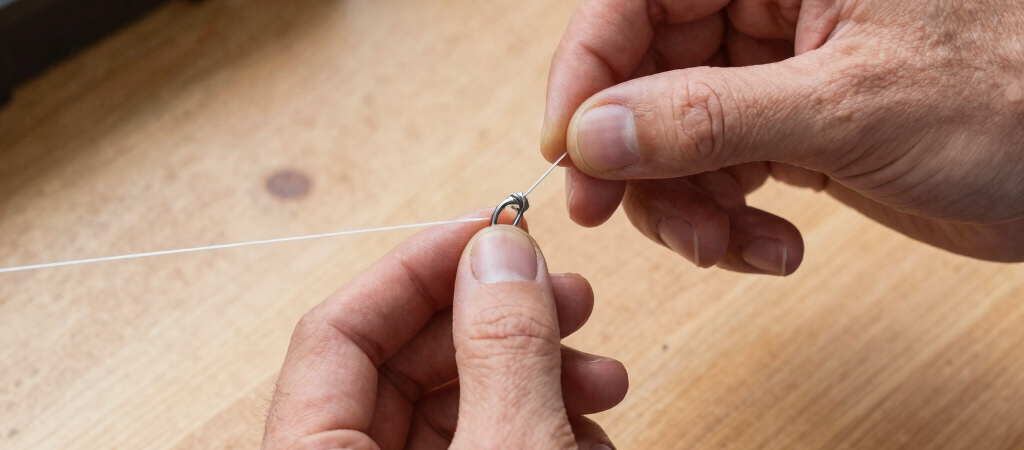
The Improved Clinch knot remains a classic choice for securing terminal tackle when using monofilament and fluorocarbon lines under twenty-pound test strength. Pass the line end through the eyelet, wrap five times around the standing line, tuck back through the first loop, and pull snug while moistening the line. Lubricating line with water before cinching prevents friction heat that weakens synthetic line materials.
The Palomar Knot for Braided Lines
Slick braided lines can slip through standard knot wraps, making the double-strand Palomar knot the premier choice for braid hook connections. Doubling the line to form a loop before passing through the hook eye creates a non-slip hold with nearly one hundred percent line strength retention. It is fast to tie on the water, even when wearing lightweight cold-weather fishing gloves.
Testing Knot Integrity and Trimming Tag Ends
Always give every freshly tied knot a firm pull against a safe surface before making your first cast into cover. Trim tag ends cleanly with sharp line clippers, leaving roughly one-eighth of an inch buffer to prevent accidental slippage under sudden load pressure. Discard frayed line sections immediately rather than risking line failure on a snag.
Keeping Tackle Organized and Compliant
Keeping line trimmings out of natural waterways is an essential part of clean angling practice. Stash cut tag ends inside a dedicated pocket or trash pouch until you reach proper shore disposal bins. Checking regional tackle regulations also ensures your chosen hook styles, such as barbless hooks in specific catch-and-release streams, remain fully compliant.