
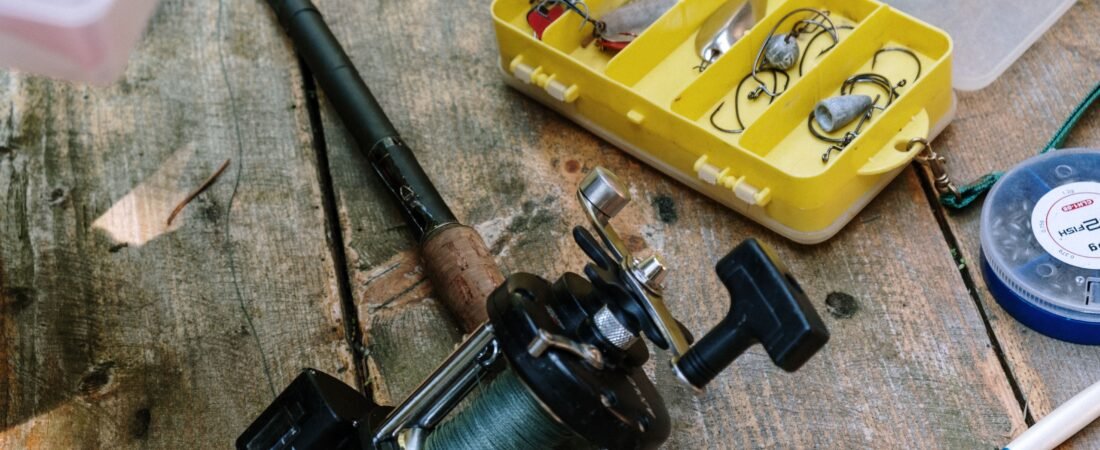
The short answer: if you are new to fishing, buy a spinning reel. Both Bass Pro Shops and Outdoor Life describe spinning gear as easier to learn and more forgiving, and it handles light lures and light line well. Baitcasting reels reward you later with distance, accuracy and power on heavier line, but they come with a learning curve you do not need on day one.
Disclosure: some links on this site may be affiliate links. If you buy through them, we may earn a commission at no extra cost to you.
Quick comparison
| Spinning reel | Baitcasting reel | |
|---|---|---|
| Learning curve | Gentler | Steeper (thumb control and settings) |
| Backlash risk | Rare, but line twist can happen | Common while learning |
| Light lures and light line | Handles them well | Harder to cast very light lures |
| Heavy line and big lures | Small spools struggle with thick line | Handles heavier line and casts farther |
| Reel position on the rod | Under the rod | On top of the rod |
| Best first choice? | Yes, for most beginners | Later, once you are comfortable |
How the two reels work
A spinning reel hangs beneath the rod. The spool stays still while the line spirals off the end of it, and you flip a bail to let the line go and close it again to reel. A baitcasting reel sits on top of the rod, and its spool spins as the lure pulls line out. Because the spool is turning, you need to control it so it does not spin faster than the line is leaving, or you get what anglers call a backlash or a bird’s nest.
That one difference explains most of what follows. Spinning reels are forgiving because nothing spins out of control. Baitcasters are powerful and precise because the spool is directly engaged, but you are the one managing it.
Why beginners are usually told to start with spinning
Bass Pro Shops’ 1Source guide, written by Ron Brooks and updated in April 2026, says spinning gear is easier for newcomers and avoids the backlash problems common with baitcasters, and that most anglers start there. Outdoor Life agrees, noting that spinning reels are generally easier for newcomers and more forgiving in tight casting spots. It also points out that spinning reels handle lightweight lures well, especially on light line, because they need less inertia to start the line moving.
Take Me Fishing takes a similar view in its casting guide: it describes baitcasting as needing more practice, and it presents spincast reels as a good starting point for beginners. The consistent message across sources is that the best learning reel is the one that lets you spend your attention on where the lure goes rather than on the reel.
What baitcasters do better
Baitcasting is not just a harder version of the same thing. The Bass Pro guide says baitcasters handle heavier line and can cast farther in the same size range. They are the standard for muskie, northern pike and large catfish, although the guide notes that spinning gear is increasingly used for these fish thanks to braided line. Baitcast rods generally have more backbone, meaning stiffness near the handle, which the guide says helps rip lures through vegetation and gives a stronger hookset.
Outdoor Life adds that baitcasters give more casting distance and precise accuracy once you have learned thumb control. Take Me Fishing makes a related point: baitcasting lets you place lures accurately near structure where fish feed. Accuracy near cover is the reason many bass anglers prefer them, and Bass Pro mentions that some anglers move to baitcasting because professional bass anglers use it.
What spinning reels do better
Spinning reels have their own advantages that experienced anglers do not abandon. The Bass Pro guide says lighter line favors spinning, while Outdoor Life says they handle light lures well. The guide also notes that some anglers stay with spinning for years, and the right choice depends on the target fish, the bait and personal preference rather than one type being better overall.
There is one trap on the spinning side: line twist. Outdoor Life notes that spinning reels rarely backlash but can develop line twist. Bassmaster contributor Michael Iaconelli lists common causes such as spooling in the wrong direction, overfilling the spool and cranking the handle with the bail open. Our fishing line article covers how to spool correctly, because it matters on both reel types.
Choose by what you throw
The most useful way to decide is to look at the lures and line you plan to use.
- Light lures, small baits and light line: spinning. Outdoor Life says baitcasters are harder to use with very light lures.
- Heavier lures, heavier line and heavy cover: baitcasting. Bass Pro says baitcasters handle heavier line and give rods more backbone for pulling lures through vegetation.
- Braided line: it works on both, but be careful on baitcasters. Bass Pro says braid causes backlash on baitcasters because thin line can sink into the spool, and some spinning reels are designed to prevent line from burying.
- Monofilament: the guide says mono under about 10-pound test is rarely used on baitcasters. If you fish very light mono, choose a spinning reel.
- Big fish such as muskie, pike or large catfish: baitcasting is the standard, with the exception that braid has made spinning increasingly workable.
Sports Illustrated’s Justin Hoffman gives bass examples of both setups. For spinning, he suggests a 7-foot medium-action rod with a 2000 or 2500 reel for most baits, or a 7’2″ medium-heavy rod for heavy cover. For baitcasting, he suggests a 7-foot medium-heavy rod with a 7.1:1 reel. He recommends braid for beginners at around 15 pounds on spinning gear and about 50 pounds on baitcasting gear, and stiffer rods with at least 30-pound line for hollow-body frogs. Those are bass-fishing recommendations, so use them as examples rather than rules for every species.
How casting differs
Take Me Fishing lays out the two casts side by side. For a spinning reel, you hold the rod at about waist height with the reel underneath, let the lure hang 10 to 18 inches below the rod tip, pinch the line with your forefinger and open the bail. You sweep the rod back over your dominant shoulder, then forward toward the target, releasing the line as the rod passes the shoulder. Then you close the bail by hand and start retrieving.
For a baitcaster, you hold the rod at waist height with the reel on top and your thumb resting on the spool, with the lure hanging 8 to 10 inches below the tip. You press the button to put the reel in free spool while keeping your thumb on it, sweep back and forward, lift your thumb as the rod passes forward so the lure pulls line off, and put your thumb back on the spool as the lure hits the water. Then you reel once or twice to engage the anti-reverse.
The extra step is the thumb. On a spinning cast, a finger releases line. On a baitcast, your thumb is brake and release at the same time, and learning that rhythm is the learning curve.
A skills ladder for moving to a baitcaster
If you want to try baitcasting, you do not have to jump straight in. The Hooked in Fishing guide describes the controls that make learning manageable.
- Set the spool tension knob for each lure. Start with the knob fully tightened, then loosen it until the lure falls at a steady pace and stops when it hits the ground without the spool overrunning. If you get backlash, add tension. If the lure falls too slowly, back off.
- Start with the magnetic brakes fully on. That makes backlash unlikely but limits distance. Lower the brakes gradually as your skill improves.
- Make at least 10 clean casts in a row before each adjustment. Restart the count after any backlash.
- Use your thumb to slow the spool as the lure lands. With the brakes lowered, this becomes your main control.
- Avoid casting into the wind. Cast with the wind or across it while you learn.
- Use a strip of electrical tape as a limit. Put it on the spool just beyond your best casting distance so you cannot cast past it.
- Practice away from the water. Take Me Fishing suggests a backyard or park to build a natural casting motion.
Use a heavier lure at first, since light lures are harder to cast on a baitcaster, and avoid fine braid until your thumb control is reliable. Fill the spool to within about 1/16 inch of the rim, which is Game and Fish’s recommendation for baitcasting reels.
Common mistakes when choosing
- Buying a baitcaster because a pro uses one. Bass Pro notes that is one reason anglers switch, but the guide stresses the right choice depends on fish, bait and preference.
- Skipping the learning curve. Expecting a baitcaster to cast cleanly out of the box usually ends in tangled spools.
- Putting light mono on a baitcaster. The Bass Pro guide says mono under about 10-pound test is rarely used on them.
- Overfilling a spinning spool. It leads to loose coils and tangles.
- Ignoring rod match. A baitcast reel works best on a baitcast rod, and Bass Pro says those rods generally have more backbone.
Which should you buy first?
Choose spinning if you are brand new, fish with light lures or line, or want the fewest problems on your first outings. Choose baitcasting if you already cast comfortably, want to throw heavier lures in cover, and are willing to practice. Many anglers own both, and nothing in the sources suggests you must switch.
How we researched this
This guide is based on published articles and public information. We have not tested these reels ourselves. We read Bass Pro Shops’ 1Source guide (updated April 2026), Outdoor Life (modified February 2025), Take Me Fishing, Hooked in Fishing, Sports Illustrated, Bassmaster and Game and Fish. Sources are listed below. Where they give different advice, such as beginner reel recommendations, we say so.
FAQ
Is a baitcaster better than a spinning reel?
Neither is better overall. Bass Pro’s guide says the right choice depends on the target fish, the bait and personal preference. Baitcasters handle heavier line and offer precision, while spinning reels are easier to learn and handle light lures well.
Can a beginner use a baitcasting reel?
Yes, with patience. Hooked in Fishing recommends starting with the brakes fully on and lowering them as you improve, and Take Me Fishing suggests practicing in a yard or park first.
Can I use braid on a baitcaster?
You can, but Bass Pro warns that braided line causes backlash on baitcasters because thin line can sink into the spool. Learn thumb control on heavier, more forgiving line first.
Which is better for bass?
Both are used. Sports Illustrated gives example setups for each, with spinning for most baits and baitcasting for heavier cover work.
What is backlash?
It is a tangle on a baitcasting spool that happens when the spool spins faster than the line leaves it, according to Outdoor Life.