
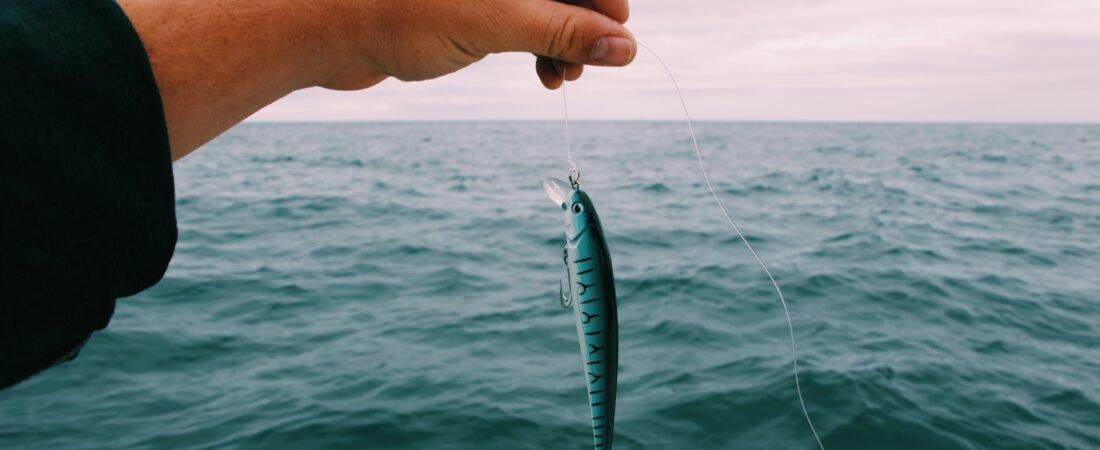
The short answer on live bait vs artificial lures: neither wins every time. Bassmaster’s Keith Sutton writes that a bass will almost always eat a real crayfish or minnow quicker than a plastic one, yet he also says lures can trigger strikes from inactive fish and let you cover more water. FishAnywhere says live bait is easier for beginners and works when fish are sluggish. A useful rule: use live bait when you want a slow, stationary presentation and the fish are sluggish, and use lures when you need to cover water or fish around cover.
Disclosure: some links on this site may be affiliate links. If you buy through them, we may earn a commission at no extra cost to you.
In this guide:
- Decision table
- The case for live bait
- The case for lures
- Where the sources disagree
- Combining both
- Handling live bait
- Rigging live bait
- Conditions that change the answer
- A simple test plan
- Common beginner mistakes
- How we researched this
- FAQ
- Sources
Decision table
| Situation | Leans toward | Source |
|---|---|---|
| Cold water or after a weather front, sluggish fish | Live bait | FishAnywhere |
| Heavily pressured water | Live bait | FishAnywhere |
| Anchored or stationary spot | Live bait | FishAnywhere, Bassmaster |
| Covering a lot of water to find active fish | Lures | FishAnywhere, Bassmaster |
| Casting precisely around structure or vegetation | Lures | FishAnywhere |
| Catch and release, fewer gut-hooks | Lures | FishAnywhere |
| Walleye and catfish | Live nightcrawlers | Bassmaster |
| Panfish | Small jig under a bobber, or bait | Bassmaster, Zebco |
| Inactive bass that ignores bait | Topwater or buzzbait | Bassmaster |
| You cannot keep bait alive | Lures | FishAnywhere |
The case for live bait
Sutton gives three arguments in his Bassmaster article, posted in March 2020. Fish generally prefer natural prey, which he illustrates with the line that a bass will almost always eat a real crayfish or minnow quicker than a plastic one. Live bait is cheaper than most artificial lures. And it works best for stationary or slow-moving presentations.
FishAnywhere adds that live bait’s natural scent and taste draw strikes, that it works well when fish are inactive or pressured, that it is easier for beginners, and that it can catch picky feeders that will not chase lures. The article’s line is that because it is the real thing, live bait can tip the odds in your favor when conditions are tough. The site gives freshwater examples of worms, minnows, shad and leeches, and says live bait is the better choice in cold water or after a weather front, with scent-driven species like redfish and catfish, in heavily pressured areas and in anchored or stationary spots.
Zebco’s Fishing 101 guide, from April 2026, calls nightcrawlers and leeches reliable choices, recommends minnows for larger species such as bass, walleye and pike, and grub worms for panfish like bluegill and crappie. It also mentions artificial bait pellets as a mess-free option, especially for kids.
Species examples
Sutton’s species examples are specific. For walleye and catfish, live nightcrawlers outperform artificial imitations. For panfish, a small jig fished a foot or two beneath a bobber works well. Those are one writer’s claims, but they match the general pattern across the sources: for species that find food by scent, or for slow, small-mouth fish, bait has a strong case.
The case for lures
Sutton lists several arguments for lures. They are convenient, because you can switch types quickly, store them indefinitely and avoid keeping bait alive, and they are less messy. They are fast, because they can be retrieved faster to cover more water. They can trigger strikes from inactive fish that ignore a slow-moving bait. Some anglers enjoy the challenge. The drawback he lists is that lures cost more over time, since many snag in cover and get lost.
FishAnywhere’s list for lures is similar. They are reusable and durable, they let you cover water quickly, they come in many presentations, colors and sizes, they are easier to store and transport, and they often cause fewer gut-hooks, which suits catch and release. It recommends them for covering large areas to find active fish, matching prey during feeding frenzies, making precise casts around structure or vegetation, and situations where keeping bait alive is impractical.
For a beginner choosing lures, Sutton recommends small, shallow-running crankbaits, small spinners and pre-rigged weedless plastic worms, and the rule to use big lures for big fish and small lures for small fish. Our types of fishing lures guide covers each family.
Where the sources disagree
The sources do not contradict each other outright, but they pull in different directions on a few points.
- Which is easier for beginners. FishAnywhere says live bait is easier for beginners. Bassmaster lists convenience as an advantage of lures, since you do not need to keep bait alive. Both can be true. Bait is simple to present, and lures are simple to carry.
- Which catches more. Sutton says fish generally prefer natural prey, but he also notes that an inactive bass may strike a topwater plug out of annoyance or impulse while ignoring a shiner under a bobber. The same fish, depending on mood, can favor either.
- Pressured fish. FishAnywhere lists live bait for pressured areas but also says wary or pressured fish may ignore lures, which is the same point from the other side.
- Cost. Sutton says live bait is cheaper than most artificials and that lures cost more over time because of snags. FishAnywhere points out that lures are reusable and durable, so there is less restocking. The cost comparison depends on how often you lose lures and how often you buy bait.
The honest conclusion is that each source describes tradeoffs, and none claims a universal winner. FishAnywhere has no listed author or date, so weigh it accordingly.
Combining both
FishAnywhere suggests two combinations. One is tipping a jighead with bait. The other is switching to live bait when fish follow a lure but will not commit. Mystery Tackle Box lists ball-head live-bait jigs as one jig style, which is another bridge between the two approaches. The idea is not to choose a side permanently. Use lures to find fish, then slow down with bait when they are there but not biting. That ordering is our editorial summary of the sources, not a rule.
Handling live bait
Sutton gives two practical tips. Keep bait lively, since dead or glassy-eyed bait is less effective. And check state regulations on collecting and using live bait. The second is worth emphasizing. Rules on which species of baitfish are legal, whether you can collect your own, and whether you can move bait between waters vary by state, and none of the sources we read list them.
Take Me Fishing’s pier guide adds that you can carry a battery-powered bait bucket with an aerator to keep bait alive. Mystery Tackle Box points out hooks sized for bait, such as size 6 or 8 Aberdeen hooks for panfish.
Rigging live bait: what the guides list
The simplest live-bait setup uses parts you already own if you have read our beginner tackle box checklist. Zebco describes split-shot sinkers as small round weights that pinch onto the line to sink bait to where fish are, and bobbers as floats that clip onto the line and sit on the surface. Sutton’s panfish example, a small jig a foot or two beneath a bobber, uses the same idea.
Hook size depends on the bait and the fish. The Minnesota DNR’s tackle box guide lists sizes 6, 8 and 10 for stream trout and panfish, and sizes 2, 1 and 1/0 for walleye and northern pike, and also lists circle hooks, which it says hook the fish in the mouth without a jerk. Zebco describes small, light wire hooks as a great all-around choice for beginners and larger, slightly curved octopus hooks for bigger fish or larger baits such as whole nightcrawlers or minnows. Mystery Tackle Box suggests size 6 or 8 Aberdeen hooks for panfish and 3/0 or 4/0 offset shank worm hooks for bass.
The Minnesota DNR guide also lists fresh bait beyond worms and minnows, including bread and whole-kernel canned corn. Whether those are legal or effective where you fish is something to check locally, because none of our sources discuss it further.
Conditions that change the answer
FishAnywhere says live bait suits cold water or the period after a weather front, when fish are sluggish. If you want to know when those conditions are likely, see our guide to the best times and weather for fishing. Sutton adds that live bait works best for slow presentations, which fits the same picture: when fish are slow, slow down.
A simple test plan
This section is our editorial suggestion, not from the sources. On a trip, bring one bait and one lure that suit your fish. Start with whichever matches the conditions in the table above. If you go thirty minutes without a bite, switch to the other, but change only one thing at a time. Write down what worked and in what conditions. After a few trips you will have your own table that matches your waters, which is more useful than any general rule.
Common beginner mistakes
- Treating it as an either-or choice. FishAnywhere describes combining them.
- Letting bait die in the bucket. Sutton says dead or glassy-eyed bait is less effective.
- Using a big lure for a small fish. Sutton’s rule is to match size to the fish.
- Ignoring bait laws. Check your state.
- Giving up on a lure too quickly in slow conditions. FishAnywhere says live bait does better in cold water, so switching can help.
How we researched this
This guide is based on published articles and public information. We have not tested bait or lures side by side. We read Bassmaster (Keith Sutton, March 2020, modified February 2022), FishAnywhere (undated), Zebco (April 2026), Mystery Tackle Box (July 2021), the Minnesota DNR (2006) and Take Me Fishing (June 2018). Claims about which catches more are the opinions of those writers, not controlled comparisons.
FAQ
Is live bait better than lures?
Neither is better overall. Sutton says fish generally prefer natural prey, while also noting that lures can trigger strikes from inactive fish and let you cover more water.
What live bait is best for beginners?
Zebco calls nightcrawlers and leeches reliable choices, recommends grub worms for panfish and minnows for bass, walleye and pike.
What lure should a beginner use?
Sutton recommends small, shallow-running crankbaits, small spinners and pre-rigged weedless plastic worms.
Can I use both at once?
Yes. FishAnywhere suggests tipping a jighead with bait or switching to live bait when fish follow a lure but will not commit.
Do I need to check bait rules?
Yes. Sutton says to check state regulations on collecting and using live bait.
Sources
- Bassmaster, Bass Basics: Which is best, live bait or lures? (Keith Sutton, 2020)
- FishAnywhere, Live Bait vs. Artificial Lures: Which to Use and When
- Zebco, Fishing 101: Basic Tackle
- Mystery Tackle Box, 10 Essentials Every Beginner Fisherman Needs
- Minnesota DNR, Let’s outfit a tackle box
- Take Me Fishing, Pier Fishing Tips & Tricks For Beginners