
The short answer: the largemouth bass (Micropterus salmoides) is one of the most popular freshwater game fish in the United States. It lives in warm, clear, slow or still water, grows to 10 pounds or more in the right waters, and eats almost anything it can swallow, mostly fish and crayfish. To catch one, fish near cover such as weeds, docks and fallen trees, and match your lure to the season.
Disclosure: some links on this site may be affiliate links. If you buy through them, we may earn a commission at no extra cost to you.
In this guide:
- Quick facts
- How to identify a largemouth bass
- Where largemouth bass live
- What largemouth bass eat
- How big do largemouth bass get?
- Spawning and life cycle
- How to catch largemouth bass
- Season by season
- Gear to start with
- Rules and handling fish
- FAQ
Quick facts
| Fact | Largemouth bass |
|---|---|
| Common name | Largemouth bass (also black bass, bucketmouth, bigmouth) |
| Scientific name | Micropterus salmoides |
| Family | Sunfish family (Centrarchidae) |
| Native range | Eastern North America, from the St. Lawrence River and Great Lakes south to the Gulf of Mexico and northern Mexico |
| Habitat | Lakes, ponds, reservoirs and slow rivers with weeds, wood or other cover |
| Typical size | About 10 to 20 inches, roughly 1 to 3 pounds in many waters |
| Trophy size | Around 8 pounds or more; Northern-strain fish top out near 10 pounds, while Florida-strain fish can reach 20 pounds |
| World record | 22 lb 4 oz, tied (George Perry, Georgia, 1932; Manabu Kurita, Japan, 2009) |
| Diet | Fish, crayfish, frogs, large insects |
| Best temperature | Most active in warm water, roughly 70 to 85°F |
| Beginner friendly? | Yes: common, widespread and willing to bite |
Size and weight vary a lot by region, food supply and the age of the fish, so treat the typical figures as ranges, not promises. The sources behind every number are listed at the end of the guide.
How to identify a largemouth bass
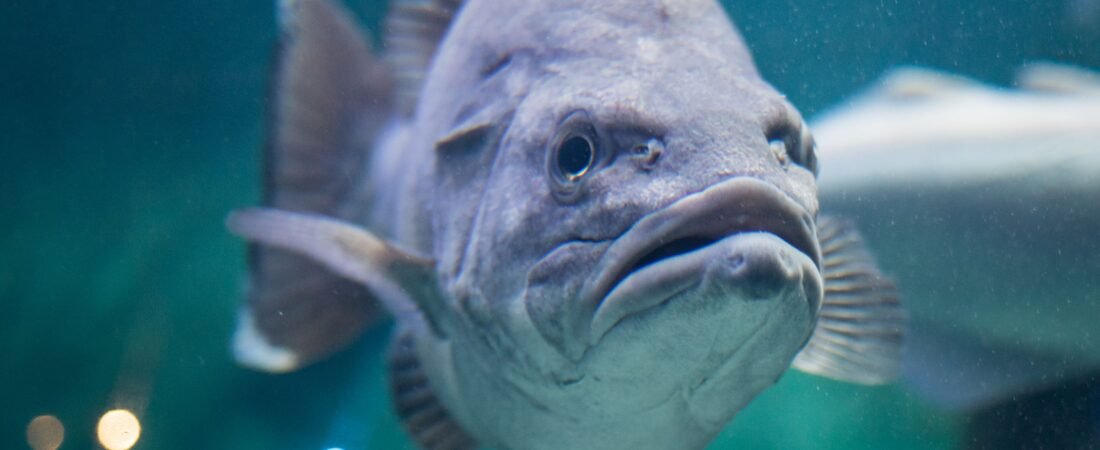
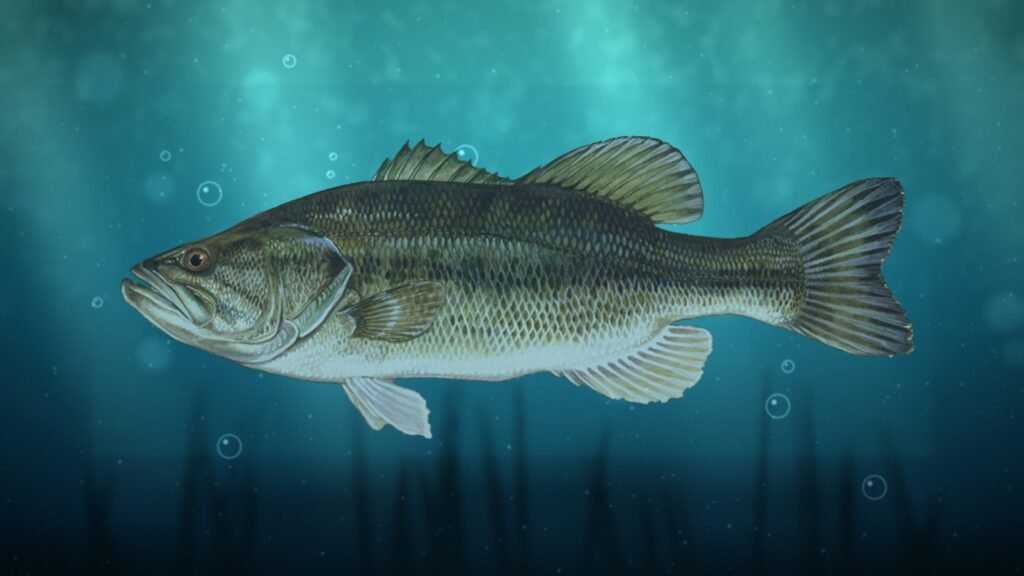
The name is the clue. On a largemouth bass, the upper jaw extends past the back edge of the eye when the mouth is closed. The Michigan DNR also lists a deep notch between the spiny and soft parts of the dorsal fin, and a body that is longer than it is deep.
Color is usually light to dark green with a broad dark stripe along each side. The Iowa DNR notes that this stripe can fade in large adults or in murky water, and that the belly is greenish-white or yellowish.
| Feature | Largemouth bass | Why it helps |
|---|---|---|
| Jaw | Upper jaw extends past the rear of the eye | The easiest check, especially in adults |
| Dorsal fin | Deep notch between the spiny and soft sections | Nearly separates the fin into two parts |
| Side stripe | Broad, dark and continuous | Can fade in big fish or murky water |
| Young fish tail | Bicolored (spotted and smallmouth bass have a tricolored tail) | Useful for small fish (Iowa DNR) |
Check your state’s fishing rules for identification help if your water also holds spotted bass or smallmouth bass, because limits and size rules can differ by species.
Where largemouth bass live
Largemouth bass prefer warm, fairly clear water with little or no current. The sources list farm ponds, small lakes, large reservoirs, swamps and slow, calm stretches of rivers. The Mississippi State fact sheet says water clarity should be at least 15 inches, because bass feed mainly by sight and do not grow well in muddy ponds.
They rarely hold in deep water. The Michigan DNR says they are seldom found deeper than 20 feet there, and the Wisconsin DNR gives the same depth limit. In the day they shelter under lily pads, overhanging trees, docks and brush, then ambush prey from that cover.
| Water type | What to look for |
|---|---|
| Ponds | Weed edges, docks, brush, the deepest corner |
| Lakes | Weed beds, points, drop-offs, boat docks, fallen trees |
| Reservoirs | Standing timber, creek channels, bridge pilings, old roadbeds, points |
| Slow rivers | Calm backwaters, wood and other cover |
Temperature drives activity. The North Carolina wildlife agency says bass are most active between about 77 and 86°F, that feeding slows as water nears 50°F, and that they cannot survive long periods above 98°F. The Iowa DNR says most prefer 77 to 80°F in summer and avoid water above 80°F.
What largemouth bass eat
Largemouth bass are opportunistic. The Iowa DNR describes them as feeders that target the most abundant and vulnerable prey, and says stomachs have contained fish, crayfish, large insects, frogs, worms and occasionally small mammals and birds.
- Fry: yolk sac first, then zooplankton, then insect larvae and small fish at about 1.5 to 2 inches (Mississippi State, Texas A&M).
- Juveniles: insects and fish fry, then mostly fish.
- Adults: mainly fish and crayfish. In ponds and small lakes, sunfish such as bluegill are key forage. In big reservoirs, shad are the main prey (South Carolina DNR).
This is why lures that look like minnows, bluegill, shad, crayfish and frogs work so well, and why live bait such as minnows and nightcrawlers works almost anywhere. Our guide to types of fishing lures explains how each lure family imitates these prey.
How big do largemouth bass get?
Most largemouth bass you catch will be modest. The Mississippi State fact sheet says normal growth is about half a pound in the first year, and South Carolina reports an average weight of 1 to 3 pounds, with 8-pound fish not uncommon there. The Illinois DNR gives an average length of 10 to 20 inches.
Genetics and water matter. The Texas A&M fisheries program says the Northern largemouth tops out near 10 pounds, while a large female Florida largemouth may reach 20 pounds in warm water.
| Age | Length | Weight (Wisconsin sample) |
|---|---|---|
| 1 year | 6.7 in | 0.18 lb |
| 3 years | 11.3 in | 0.85 lb |
| 5 years | 13.7 in | 1.5 lb |
| 7 years | 16.8 in | 3.0 lb |
Those figures are a Wisconsin sample, and southern fish grow faster. Texas A&M lists typical Texas pond sizes of 8 inches at year 1 and 18 inches at year 5. Females are normally larger than males.
The world record is a tie. IGFA records list 22 pounds 4 ounces for both George W. Perry (Montgomery Lake, Georgia, June 2, 1932) and Manabu Kurita (Lake Biwa, Japan, July 2, 2009).
Spawning and life cycle
Spring spawning is the key event of the year. Sources give slightly different temperatures: Mississippi State says spawning occurs at 65 to 75°F, Wisconsin says males start nests at 60°F with egg laying at 62 to 65°F, and North Carolina says 63 to 68°F. In short, it begins as spring water warms through the low to mid 60s.
The male builds a shallow, saucer-shaped nest on sand or gravel, usually in 1 to 4 feet of water, and guards the eggs and then the fry. Eggs hatch in a few days. Males do not feed during spawning, and Texas A&M notes that the nesting period is very stressful for males in poor condition.
Lifespan varies by source and region. The Illinois DNR gives an average of 5 to 6 years, while the Mississippi State fact sheet says up to 15 years in the northern United States.
How to catch largemouth bass
Find cover first, then match the lure. The Wisconsin DNR advises targeting structure such as submerged trees, docks, stumps, weed beds, drop-offs and riprap, and looking for spots that differ from the surrounding cover, like a pocket or point in cattails.
| Lure or bait | Best for | Notes |
|---|---|---|
| Topwater plugs | Early morning, evening, calm water | Fish near weeds and shade |
| Soft plastic worms and creature baits | Year-round near cover | Rig Texas, wacky, Carolina or drop shot (Iowa DNR) |
| Jigs | Cooler water, wood and rock | Slow, bottom-contact presentations |
| Spinnerbaits | Stained water, wind, around weeds | Bigger blades in stained water |
| Crankbaits | Points, drop-offs, riprap | Wider bills create more vibration |
| Swimbaits | Open water near forage | Mimic shad and bluegill |
| Live bait | Beginners, any season | Minnows, nightcrawlers, crayfish |
The Iowa DNR adds two useful tips. Use natural colors in clear to lightly stained water, and brighter colors and larger blades in stained or muddy water. For natural bait such as nightcrawlers, it says constant movement is the key to success.
If rigging soft plastics is new to you, read our guide to soft plastic rigs for bass, and for the basics of finding fish see how to find fish: structure and cover.
Season by season
| Season | Where the fish are | What to try |
|---|---|---|
| Early spring | Deeper water, moving toward spawning areas as water nears 55°F | Slow presentations, speed up if bass are aggressive (Iowa DNR) |
| Pre-spawn and spawn | Shallow flats and nests in 1 to 4 feet | Faster lures for pre-spawn females; handle nesting fish with care |
| Post-spawn | Shallow cover, then moving deeper | Females feed more readily, males are harder to catch |
| Summer | Shade, weed lines, deeper structure | Early morning, evening or night in the shallows |
| Fall | Moving toward deeper water as it cools; feeding hard as water falls from 60 to 50°F | Often the most productive and easiest bite (Iowa DNR) |
| Winter | On or near the bottom (Michigan DNR) | Slow presentations; feeding drops sharply below 50°F (Iowa DNR) |
The Wisconsin DNR says its best fishing runs from early May to late June and from early September to mid October, when water is between 55 and 75°F. Check local reports, because timing shifts with latitude.
Gear to start with
You do not need special tackle to start. The Iowa DNR says spinning gear suits lighter lures cast into cover, while baitcasting gear suits precise casts. It also says braided line works well for topwater, spinnerbaits and jigs, and fluorocarbon suits clear water.
- Rod and reel: a medium-power spinning combo is a flexible first setup. See our best rod and reel combo for beginners.
- Line: match it to the lure and water clarity. See mono vs fluorocarbon vs braid.
- Knots: a reliable knot matters more than a fancy one. See our essential fishing knots.
- Tackle: start small. Our beginner tackle box checklist lists the basics.
For a full walkthrough, read bass fishing for beginners.
Rules and handling fish
Fishing rules vary by state and water body, and they change. Always check your state wildlife agency for license requirements, size limits and daily limits before you fish. Some waters have special bass rules, and nesting bass in spring may be protected in some places.
If you plan to release your catch, handle fish with wet hands, support the body, keep the fish in the water as much as possible, and release it quickly. In small ponds, the Texas A&M program warns that bass can easily be overharvested, so releasing fish helps keep a pond healthy.
FAQ
What is the best bait for largemouth bass? Live bait such as minnows and nightcrawlers works almost anywhere, according to state agency sources. Among artificial lures, soft plastic worms and jigs near cover are dependable choices for beginners.
What time of day is best? Early morning and evening are generally strong, and summer fishing often shifts to low light or night. Fall can be the easiest bite, per the Iowa DNR.
How big is a typical largemouth bass? Many anglers catch fish between about 10 and 20 inches and 1 to 3 pounds. Fish of 8 pounds or more are widely considered trophies.
Is the largemouth bass the same as a black bass? Largemouth bass is one of the black basses. The group also includes smallmouth and spotted bass, which have different jaw shape and tail patterns.
Can I eat largemouth bass? Many states allow harvest within limits, but some waters have advisories or catch-and-release rules. Check your state’s regulations and any fish consumption advisories first.
Sources
- Mississippi State University, SRAC: Largemouth Bass Biology and Life History
- Texas A&M AgriLife, Largemouth Bass (pond management)
- Michigan DNR, Largemouth bass
- Iowa DNR, Largemouth bass
- Wisconsin DNR, Largemouth bass
- North Carolina Wildlife Resources Commission, Largemouth bass profile
- South Carolina DNR, Largemouth bass
- Illinois DNR, Largemouth bass
- Outdoor Life, Biggest bass of all time (IGFA record)