
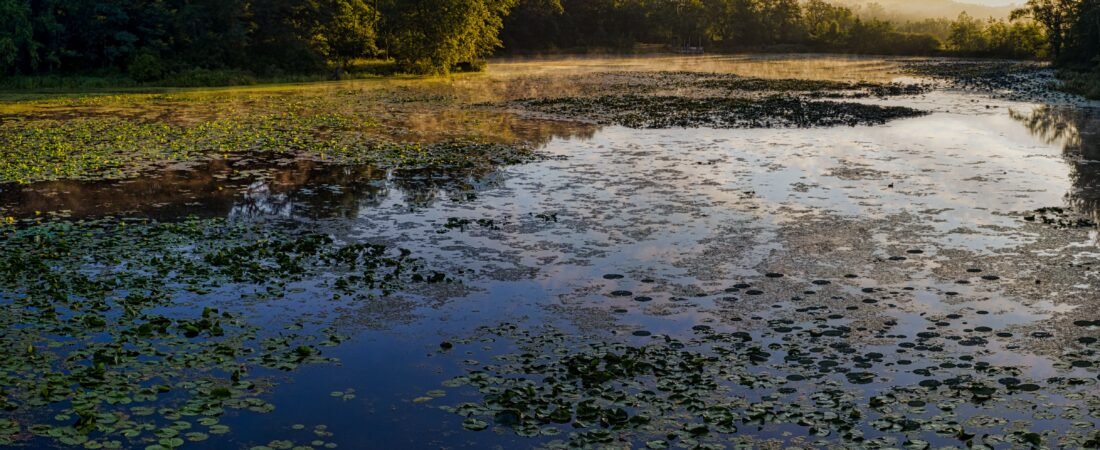
The short answer: bass fishing for beginners comes down to finding cover first and choosing a lure second. Largemouth bass hide in and around weeds, lily pads, docks, wood and points, and ambush prey from there. Use a spinning or baitcasting setup you are comfortable with, search with one lure, then slow down with a worm or jig.
Disclosure: some links on this site may be affiliate links. If you buy through them, we may earn a commission at no extra cost to you.
In this guide:
- Cheat sheet: cover, lure and line
- Know the fish
- Where to find bass
- Seasons change the plan
- Lures, in two families
- Rods, reels and line
- How to fish: find, then work
- A first-trip plan
- Safety, licenses and rules
- FAQ
Cheat sheet: cover, lure and line
Match the lure to the cover, and the line to the lure. This table combines advice from Sports Illustrated’s Justin Hoffman, FishUSA, Take Me Fishing, Zebco and Realtree. Where the sources differ, the next sections explain how.
| Cover or situation | Lure to try | Line idea |
|---|---|---|
| Open water along weed edges or points, searching | Spinnerbait, square-billed crankbait, chatterbait | Mono or braid, depending on cover |
| Thick weeds and lily pads | Hollow-body frog, weedless plastic | Braid, per Zebco and Realtree |
| Docks and wood | Flipping jig, Texas-rigged worm or craw | Fluorocarbon or braid |
| Dawn and dusk, calm surface | Topwater popper or walking bait | Mono, which floats |
| Cloudy or muddy water | Rattling crankbait, spinnerbait | Your usual line |
| Clear water, cautious fish | Natural-colored plastics, jerkbait | Fluorocarbon |
Know the fish
Largemouth are warm-water ambush fish that stay shallow and sit next to cover. Sports Illustrated’s guide describes largemouth bass as warm-water fish found across much of the United States, southeastern Canada and northern Mexico, in lakes, rivers, reservoirs and ponds. They usually stay shallow, from a few feet to about 20 feet deep, and prefer slow or still water.
You can tell them from smallmouth bass by their larger mouth and greenish-gray body. Smallmouth are browner, and they favor cooler water with rocky structure. Field & Stream’s Shaye Baker covers the same species split and lists the usual prey as crayfish, shad and bluegill. BoaterExam says most bass are found in water between 60°F and 75°F.
FishUSA adds that largemouth prefer warm, slow-moving water with plenty of cover, and that they ambush prey from structure. That is the idea to hold onto throughout this article: bass rarely cruise open water. They sit next to something, such as a weed edge or a dock post, and attack what swims by.
Where to find bass
Look for shallow cover: weeds, lily pads, docks, wood, and spots where the bottom depth changes. Take Me Fishing says largemouth bass favor shallow areas of ponds, lakes, reservoirs and slow rivers with cover such as vegetation, brush, trees or other structure. It suggests checking around submerged trees, weeds, docks, bridges and depth changes, whether you fish from shore or a boat. Sports Illustrated gives a more detailed list.
- Lily pads. They provide shade. Fish the edges and the open pockets inside them.
- Submerged vegetation. Coontail, cabbage and milfoil hide bass, and healthier weed beds tend to hold more fish.
- Docks. Low docks with weeds, rock or wood nearby offer shade and ambush points.
- Floating cattail bogs. The undercut edges attract fish.
- Submerged trees and wood. They are strongest when deeper water is close by.
- Windblown shorelines and points. Wind concentrates baitfish, and bass follow.
FishUSA adds backwaters and creek inlets in rivers and reservoirs, which can hold bass because they offer calm resting areas and oxygen-rich water that draws baitfish. In extreme heat or cold, bass can relocate to deeper structure such as drop-offs, rock piles, points and brush piles. Maine’s Department of Inland Fisheries and Wildlife makes the same point in one line: target cover.
You do not need a boat. Field & Stream lists shore fishing, pond hopping, kayaks and jon boats as ways to reach bass. It also repeats a common saying, the 90/10 rule: about 90 percent of feeding fish sit in about 10 percent of the water. Finding that 10 percent is the real skill.
Seasons change the plan
Bass move shallow in spring, seek shade and cooler water in summer, feed on baitfish in fall, and slow down and go deeper in winter. Both Sports Illustrated and FishUSA describe how bass move through the year. The two sources overlap, and this table combines them. For a deeper look at spring, see our guide to spring largemouth bass patterns in shallow lake waters.
| Season | Where bass tend to be | What the sources suggest |
|---|---|---|
| Spring | Moving shallow to feed before spawning (pre-spawn) | Jigs, spinnerbaits, chatterbaits and cranks on shallow flats near deeper water (FishUSA) |
| Summer | Cover for shade; cooler, oxygenated water | Deep cranks, jigs and topwater frogs near ledges, weed edges and shade (FishUSA); cover is strongest in summer (SI) |
| Fall | Feeding heavily on baitfish | Lipless cranks, spinnerbaits and swimbaits on points, baitfish schools and creek inlets (FishUSA); bigger baits (SI) |
| Winter | Slower, deeper | Jigs, jerkbaits and blade baits near drop-offs and rock piles (FishUSA) |
Sports Illustrated adds that weeds stay productive through summer and fall, and that late spring and early fall can be good for surface baits. For time of day, it says morning and evening are prime for surface action, and FishUSA says topwater fishing is most productive early and late in the day. BoaterExam lists dawn and dusk as peak feeding times. Sports Illustrated also notes that targeting cover is especially important during high, hot sun. Our guide to the best time and weather to fish covers the timing side in general.
Lures, in two families
Use horizontal lures to find fish and vertical lures to work the cover you find. Sports Illustrated sorts bass lures into these two groups, which helps beginners decide what to tie on.
Horizontal lures cover water. Use them to find active fish. They include spinnerbaits, square-billed crankbaits, jerkbaits, topwater poppers, chatterbaits and hollow-body frogs or mice.
Vertical lures work specific spots. Use them when you have found good cover. They include flipping jigs, Texas-rigged worms, craws or creature baits, and weedless Senko-style stickbaits.
FishUSA goes into more detail on each type. For a wider overview, see our guide to types of fishing lures.
- Soft plastics. Worms rigged Texas or wacky, crawfish imitations and swimbaits are versatile in nearly all seasons.
- Jigs. Flipping jigs suit brush, docks and grass. Football jigs suit rocky bottoms and offshore structure. Swim jigs suit shallow grass.
- Crankbaits. Shallow cranks and squarebills work around weeds, banks and docks. Deep divers reach deeper bass. Lipless cranks rip through vegetation.
- Spinnerbaits and chatterbaits. Useful in murky water, around grass, and for reaction bites.
- Topwater. Frogs work over pads and grass, walking baits excel at dawn and dusk, and poppers suit slower presentations.
Field & Stream’s beginner picks are a spinnerbait, a Texas rig, a lipless crankbait and a Ned rig. It says a spinnerbait suits water less than about 8 feet deep and a Texas rig water less than about 10 feet deep.
Take Me Fishing adds that rattling crankbaits help in cloudy or muddy water because bass can sense the vibrations, that soft plastic crayfish, frogs and lizards can be rigged weedless for fishing around vegetation, and that natural bait is recommended for kids and beginners.
For color, Sports Illustrated gives a simple rule: match baitfish, bluegill or crawfish colors. Take Me Fishing says the same in different words: choose based on the prey you can see, such as baitfish near docks or crayfish on the bottom.
Rods, reels and line: where the advice splits
A 7-foot medium to medium-heavy rod handles most bass fishing; line is where the guides disagree. Sports Illustrated suggests a spinning setup with a 7-foot medium-action rod and a 2000 or 2500 reel for most baits, or a 7’2″ medium-heavy rod for heavy cover. For baitcasting, it suggests a 7-foot medium-heavy rod with a 7.1:1 reel.
FishUSA similarly says a medium-heavy baitcasting rod suits jigs, spinnerbaits and cranks, and a medium spinning rod suits finesse presentations. Field & Stream suggests a medium-heavy spinning rod of about 6 feet 9 inches, or a 7-foot medium-heavy baitcasting rod with a 7:1 reel. Not sure which reel type to buy? See spinning vs baitcasting reels, or our guide to a first spinning reel setup for bass.
The line advice differs. Sports Illustrated recommends braid for beginners, at about 15 pounds on spinning and about 50 pounds on baitcasting, with at least 30-pound line and a stiffer rod for hollow-body frogs.
FishUSA suggests fluorocarbon in roughly 10 to 20 pounds for clear water, braid in roughly 30 to 65 pounds for heavy cover, and a braid-to-fluorocarbon leader to combine the strengths of both.
How should a beginner reconcile that? Both agree that braid belongs in heavy cover. Zebco and Realtree add that mono floats and suits topwater lures, while fluorocarbon is hard to see and suits clear water, jerkbaits and plastic worms.
If you are fishing open water or lighter lures, mono or fluorocarbon is perfectly reasonable, and our line guide explains the tradeoffs. If you are fishing lily pads and weeds, braid is the common recommendation. FishUSA also mentions polarized sunglasses, which help you see fish and cover and cut glare in clear water.
How to fish: find, then work
Cover water with a horizontal bait first, then slow down with a vertical bait on the best cover. That is Sports Illustrated’s sequence. A few technique tips from the sources:
- Vary the retrieve. Add pauses and sharp jerks on crankbaits and jerkbaits.
- Wait on topwater strikes. Sports Illustrated says to wait a second or two before setting the hook.
- Follow up a miss. If a bass misses a topwater lure, follow with a Senko where the fish appeared.
- Match speed to mood. Take Me Fishing says that if bass are chasing baitfish near the surface or moving actively around structure, try larger baits and a faster retrieve. If you see no activity, they may be near the bottom, where a slow presentation or smaller bait may work better.
- Flip or pitch in heavy cover. FishUSA says flipping and pitching target docks, fallen trees and grass, and that slow-rolling spinnerbaits near structure can draw strikes from sluggish fish.
New to casting? Our guide on how to cast a spinning reel covers the basics.
A first-trip plan
Pick water with visible cover, search with one lure, then slow down where the cover is best. This plan is our editorial suggestion, built from the sources above.
- Pick one body of water with visible cover. A pond, lake or reservoir with docks, weeds or wood is ideal. Fish near that cover rather than in open water.
- Start with a searching lure. Make fan casts with a spinnerbait or square-billed crankbait along weed edges and points.
- When you find activity or great cover, slow down. Switch to a Texas-rigged worm or flipping jig and work it near the cover.
- Try topwater at dawn or dusk if conditions allow. Wait a second or two before setting the hook.
- Note what worked. Write down the cover, lure and time of day. Take Me Fishing stresses experimenting over time.
Safety, licenses and rules
Most states require a fishing license, and the rules vary by state, age and waterbody. Check your state wildlife agency’s website before your first trip, including size and bag limits for bass.
Rules really do differ. As one example, Maine’s Department of Inland Fisheries and Wildlife encourages anglers to harvest smaller bass in most southern Maine waters, while northern Maine has unlimited harvest with no size restrictions. The page is undated, so check current rules for your own water.
If you fish from a boat or kayak, BoaterExam’s guide advises wearing a life vest, checking the weather and fishing with a partner when you can.
Common beginner mistakes
- Fishing open water with nothing nearby. Bass ambush from cover, as FishUSA and Sports Illustrated both say.
- Ignoring the season. What works in the pre-spawn spring is not what works in a hot summer.
- Using heavy line with light lures or light line in heavy cover. Match line to cover.
- Setting the hook too fast on topwater. Wait a second or two.
- Changing lures constantly instead of changing location. If the cover is good and the lure suits it, move to new cover before swapping.
Your bass checklist
- A rod and reel in the 7-foot, medium to medium-heavy range, as the sources suggest.
- Line that fits the cover (braid for heavy cover, mono or fluorocarbon for lighter work).
- One searching lure and one slow lure, such as a spinnerbait and a Texas-rigged worm.
- Colors that match the local prey.
- Polarized sunglasses, if you want help seeing cover and fish.
- Knowledge of your state’s rules.
How we researched this
This guide is based on published articles and public information. We have not fished these setups ourselves. Where the sources differ, such as line recommendations, we show both views. We read:
- Justin Hoffman, Sports Illustrated, “How To Catch Largemouth Bass” (September 5, 2025).
- FishUSA staff, “Largemouth Bass Fishing Tips: A Complete Guide” (March 3, 2025). FishUSA is a tackle retailer.
- Shaye Baker, Field & Stream, “Bass Fishing 101” (March 23, 2026).
- Teri Williams, BoaterExam, “A Guide to Bass Fishing for Beginners” (April 18, 2024).
- Maine Department of Inland Fisheries and Wildlife, largemouth bass species page (undated; copyright 2026).
- Take Me Fishing, “Bass Fishing Tips” (undated).
- Katie Rojas, Zebco, “Differences in Fishing Line” (March 2026).
- Joe Balog, Realtree, “Fluorocarbon, Braid, or Mono: Which Fishing Line Works Best?” (May 17, 2024).
FAQ
What is the best lure for a beginner bass angler?
There is no single best lure. Sports Illustrated suggests using a horizontal bait such as a spinnerbait or square-billed crankbait to find fish, then a Texas-rigged worm or jig to work cover. Take Me Fishing recommends natural bait for kids and beginners.
What time of day is best for bass?
Early morning and evening. Sports Illustrated says these are prime for surface action, and FishUSA says topwater is most productive early and late in the day.
Do I need a baitcasting reel for bass?
No. Sports Illustrated gives a spinning setup that handles most baits, with a baitcasting setup as an alternative for heavier cover.
What is the 90/10 rule in bass fishing?
Field & Stream describes it as about 90 percent of feeding fish being in about 10 percent of a water body. In practice, it means finding the right cover instead of fishing everywhere.
Where do bass go in winter?
FishUSA says they slow down and move deeper, near drop-offs and rock piles.